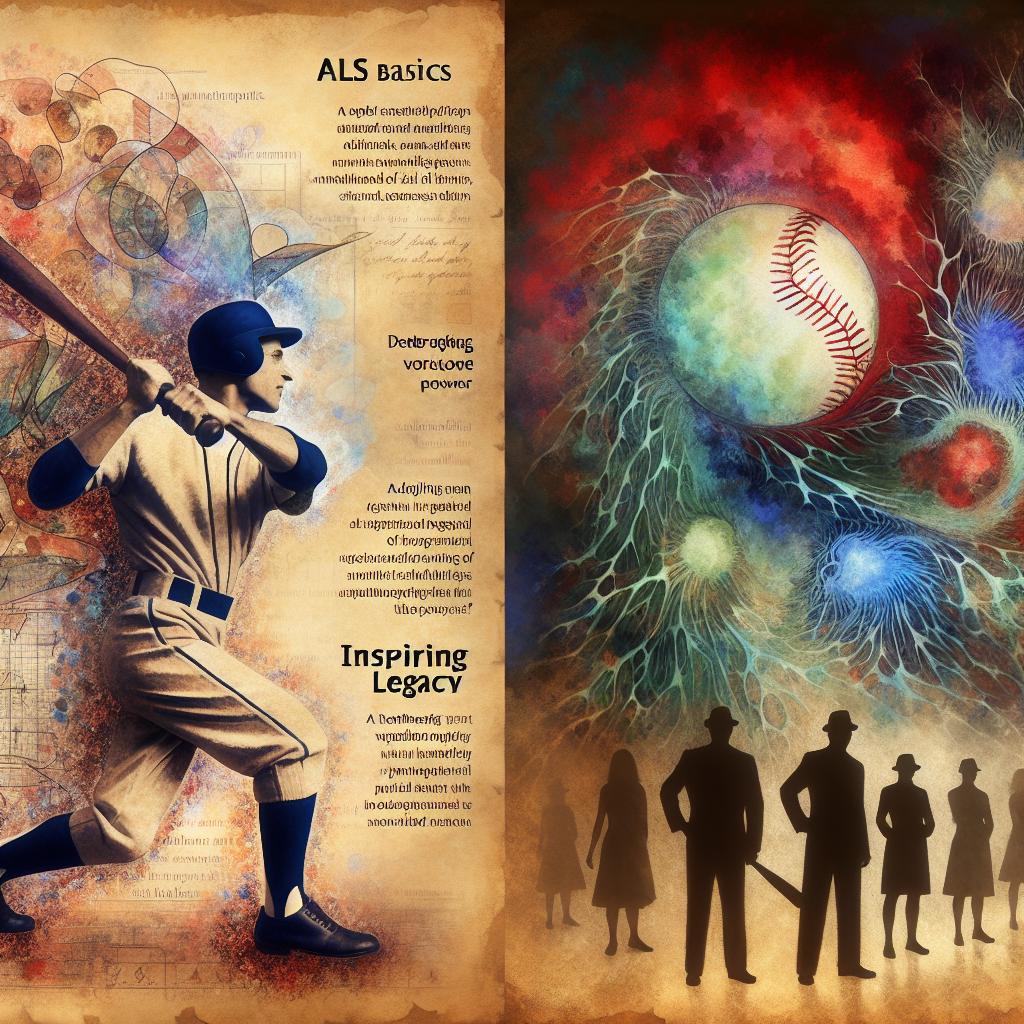
ALS Basics: Understanding the Heartbreaking Yet Inspiring Legacy that is Lou Gehrig’s Disease
Amyotrophic lateral sclerosis (ALS), also known as Lou Gehrig’s disease, is a neurogenerative disease that destabilizes neurons in the brain and spinal cord. This instability progressively robs victims of their ability to control their muscles and perform basic activities. Through focusing on ALS basics, this article aims to provide an insightful discussion around this devastating yet fascinating condition, highlighting the heartbreaking legacy left by world-renowned baseball legend, Lou Gehrig, while also shedding light on the inspiring advancements made in related research.
What is ALS?
At the core of ALS basics is an understanding of what exactly the disease entails. Defined as a motor neuron disease, ALS causes nerve cells to gradually break down and die. These motor neurons are essential for muscle control. As they degenerate, so does a patient’s ability to initiate and control muscle movement. The condition eventually leads to total paralysis.
However, ALS doesn’t usually affect a patient’s cognitive abilities or indeed all nerves associated with feeling. At least not initially. This means that while patients may eventually lose control over their bodies, they typically retain full mental capacity and can still sense everything happening to them.
The Legacy of Lou Gehrig
Undeniably, a major part of understanding ALS basics is understanding the legacy of Lou Gehrig. Gehrig was a world-famous baseball player, renowned for his prowess and endurance on the field. However, Gehrig’s name became permanently tied to the disease after he was diagnosed with ALS, an event that dramatically changed his career and life.
Despite the frightening diagnosis and the devasting impact of ALS on his life, Gehrig continued to exhibit an inspiring spirit. During a farewell speech given at Yankee Stadium, Gehrig famously stated, “Today, I consider myself the luckiest man on the face of the Earth,” showcasing remarkable courage and strength in the face of adversity. Gehrig’s courageous response to his diagnosis not only highlighted the cruel nature of ALS but also demonstrated the strength of the human spirit.
Intriguing Developments in ALS Research
While ALS has no known cure to date, advancements in ALS research present hope. Indeed, the inspiring legacy that is Lou Gehrig’s disease does not stop at his courage, but extends to encouraging developments in our understanding of and fight against this disease.
Scientific progress, while slow, is being made. For instance, recent research has identified specific gene mutation linked to familial ALS, which constitutes between 5-10% of all ALS cases. This significant breakthrough enhances our understanding of the disease’s biological basis and provides a potential path towards finding an effective treatment.
Meanwhile, current treatments aim to slow down the disease’s progression and improve the quality of life for ALS patients. These treatments typically involve multidisciplinary care, the use (in certain circumstances) of the drug Riluzole, and physical therapy.
Additionally, the inspiring determination and resilience of the ALS community have led to significant fund-raising, resulting in increased research funds dedicated to deciphering the enigma that is the Lou Gehrig’s disease and finding new treatments or, hopefully, a potential cure.
Conclusion
In sum, while understanding ALS basics and learning about Lou Gehrig’s disease may seem quite distressing, it’s also true that progress is being made. Lou Gehrig’s legacy as an ALS ambassador has not only brought public awareness and understanding of the illness but also instilled a fighting spirit in tackling it. There’s reason to hope that these steps forward will pave the way for continued advancement towards alleviating the impact of this devastating disease, and perhaps one day, finding a cure.
If you or a loved one are affected by ALS and require legal support or simply wish to gain more understanding, get in touch with our team. Visit “/contact” for more information or place a call through “702-385-6000”. Also, explore our blog “/blog” for more inspiring and informative articles.